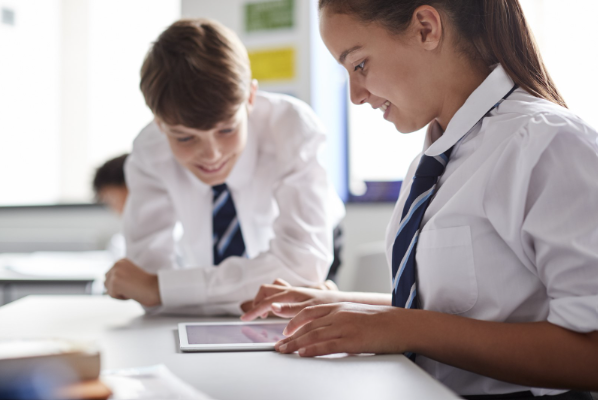

Digital Textbooks: Transforming Education in Southeast Asia
Digital textbooks are becoming a practical response to some of the biggest pressures facing education across Southeast Asia. In a region shaped by fast-growing student populations, uneven infrastructure, diverse language needs, and strong demand for better learning access, the move to digital and open textbooks is no longer just a technology trend. It is an education strategy. The UNESCO Global Education Monitoring Report article Are Digital Textbooks the Way of the Future? highlights how digital and open textbooks can help address textbook shortages, rising costs, and access to materials in local languages, while also pointing to examples from Indonesia and Vietnam that show what scaled implementation can look like.
But this shift is about more than moving content online. It is about using educational technology to reduce friction in the system, improve access at scale, and create a model that is more sustainable for schools, teachers, and publishers alike. In Southeast Asia, where the education landscape varies significantly from country to country, digital textbooks offer a rare combination of flexibility and reach. They can help systems respond faster to curriculum changes, support multilingual contexts, and make resources more available outside the classroom.
Why are digital textbooks becoming so important?
Digital textbooks are gaining momentum because they solve several real problems at once:
- Reduce distribution costs across sprawling regions with multiple jurisdictions
- Make resources easier to update without waiting for new print runs
- Allow students to access content outside school hours and learn at their own pace
- Support contextual adaptation, especially where open licensing and local language content matter
- Respond faster to curriculum changes without supply chain delays
In Southeast Asia, those advantages are particularly relevant because schools often operate across a wide mix of urban, regional, and remote settings, with different levels of access to printed materials and digital infrastructure.
Access, flexibility and inclusion
eBooks make learning more flexible and accessible. For schools, they can help ensure students have the same version of an online textbook, while also making it easier to distribute content quickly and consistently. They are especially useful where print supply chains are slow, expensive, or hard to manage. That matters in a region where schools may need to source materials across multiple jurisdictions, work across several languages, or respond to shortages in a way that does not interrupt learning.
Digital textbooks also support a more responsive learning environment. They can be updated more easily than print, adapted for different cohorts, and paired with accessibility features such as text-to-speech or translation. That makes them more than a convenience. They become part of the infrastructure of learning.
The equity challenge
Digitalisation does not automatically mean equity. A Samsung survey of schools in Southeast Asia and Oceania found that while schools are seeing clear benefits from digital tools, access remains a key concern. If students do not have the right devices, connectivity, or support, then digital learning can reinforce existing gaps rather than close them.
The real test is whether every student can actually access and use the resource. That means thinking about:
- Device access — do all students have reliable access to the technology?
- Connectivity — can students engage outside the classroom and at home?
- Teacher capability — have educators been trained to use the platform well?
- Accessibility features — does the platform support students with different learning needs?
- Language support — can students learn in a language they understand?
If those elements are not in place, digital textbooks can reinforce existing gaps rather than reduce them. For Southeast Asia, this is the central policy and school leadership question. Digital learning can be transformative, but only if it is designed around actual student access, not assumed access.
What can schools do?
For schools, digital textbooks are not just a content decision. They are also an operational one. The right approach needs to balance curriculum delivery, licensing, ease of access, and administrative workload. Schools need a system that makes it simple to provision resources, manage licences, and keep content consistent across cohorts, while also supporting teachers and students without adding more manual work.
This is where many schools get stuck. The move to digital often begins with a desire to modernise, but it succeeds only when the back-end is just as strong as the front-end. Schools need a platform that is:
- Reliable and available when teachers and students need it
- Easy to administer without adding burden to library and IT teams
- Flexible enough to work across year levels and different learning contexts
- Transparent about licensing, costs, and access rights
How ReadCloud supports the shift
This is where ReadCloud fits in. ReadCloud's platform is built to simplify digital textbook delivery and give schools a more manageable way to access curriculum resources. It brings content into one unified platform and supports schools with provisioning, licensing, and access management.
ReadCloud can help schools by:
- Delivering digital textbooks and eBooks through one unified platform
- Automating resource provisioning so students get the right materials faster
- Supporting accessibility with tools such as text-to-speech and translation
- Reducing admin time for teachers, librarians, and school operations teams
This makes ReadCloud an efficient solution for schools looking for eLearning software that supports both classroom use and back-end efficiency. It is not just about replacing a printed book with a digital file. It is about building a better system for how content is selected, distributed, accessed, and managed.
Are online textbooks replacing printed books?
Not entirely. The UNESCO report is clear that digital textbooks are not a full replacement for print, but they do offer a serious opportunity to improve access and engagement. The question is not whether digital textbooks will matter. They already do. The real question is how schools, governments, and publishers can make them sustainable, equitable, and easy to use.
For Southeast Asia, that means thinking beyond one-off digitisation projects. It means building an ecosystem where content, infrastructure, affordability, and inclusion work together. Digital textbooks are most powerful when they are part of a broader education model that is designed to scale without leaving learners behind.
The bigger picture
ReadCloud sits in that space by helping schools transition to digital learning in a way that is more organised, more accessible, and less administratively heavy. For international and multi-campus schools, ReadCloud International offers a cloud-based platform that streamlines content delivery, provisioning, and licence management, helping teams keep access consistent across locations. If your school is looking for a more efficient way to manage digital textbooks and curriculum resources, contact the ReadCloud team to find out how we can help.